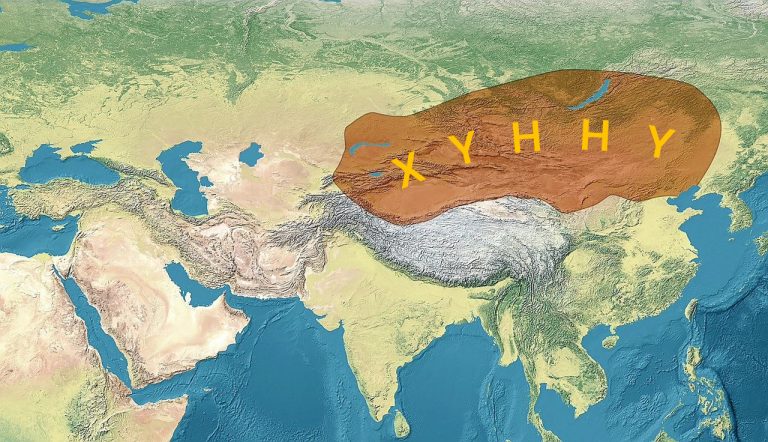
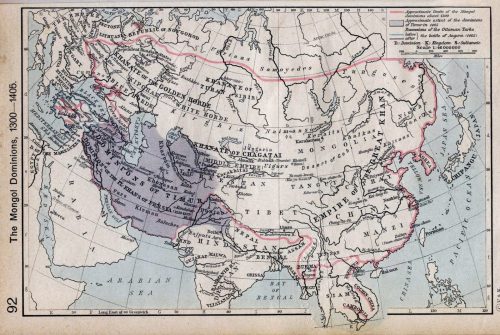
The Great Mongol Empire (1206–1368) was the largest continental state in human history, occupying territory from the Pacific Ocean to the Mediterranean Sea.
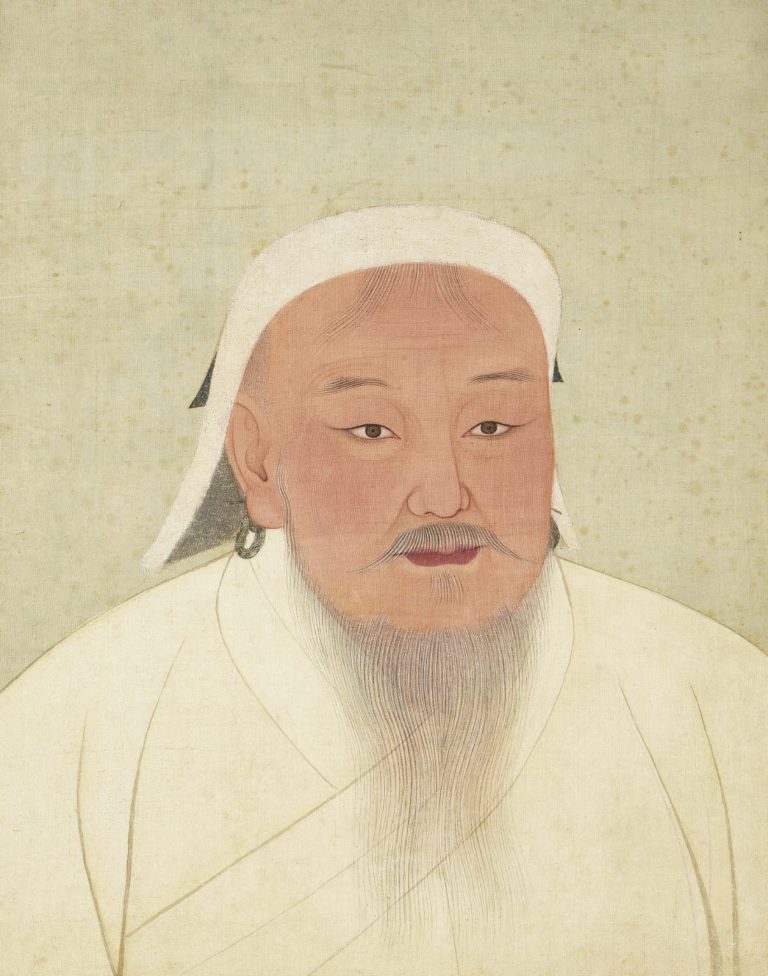
- In 1162, the Great Son of the Mongolian People, Temujin (Genghis Khan), was born in the town of Delun-Boldok, on the banks of the Onon River.
- Temujin (the future Genghis Khan) was first proclaimed khan in 1189. At that time, the Mongol nobility elected him ruler of the Taichiud tribe and the Kiyat clan, after which he adopted the title “Genghis.”
- 1202 — Temujin’s destruction of the Tatars
- 1206 — Temujin proclaimed Genghis Khan and the formation of a unified state on the territory of Mongolia. Genghis Khan carries out his great reforms. The Yasa of Genghis Khan comes into force.
- 1207–1211 — Conquest of Siberia
- 1209 — The Uyghurs submitted to Genghis Khan
- 1211-1215 — The Mongol conquest of Northern China
- 1215 — Capture of Beijing
- 1213 — The Mongols conquered the provinces of Hebei and Shandong
- 1218 — The Mongol conquest of East Turkestan and Semirechye
- 1219 — The beginning of the conquest of Central Asia
- 1219-1221 — The Mongol conquest of Khorezm, invasion of Azerbaijan
- 1220, spring — capture of Samarkand
- 1220 — Genghis Khan founds the future capital of the empire, Karakorum
- 1223, May 31 — the Mongol defeat of the combined forces of the Polovtsians and Russians at the Kalka River
- 1224-1227 –Shortly before his death, Genghis Khan divided the conquered Mongol Empire among his four sons. Each son received an ulus (allotment) to govern, but the entire empire remained subordinate to the supreme ruler, the Great Khan. This historical division resulted in the formation of four main uluses:
Ulus of Jochi: lands west of the Irtysh River, including the steppes of modern-day Kazakhstan, the Volga region, and further west. The Golden Horde later formed on this basis.
Ulus of Chagatai: included southern and southeastern Kazakhstan (Zhetysu), Central Asia, and Eastern Turkestan.
Ulus of Ogedei: encompassed the lands of western Mongolia, Altai, Tarbagatai, and the upper reaches of the Irtysh River.
Ulus of Tolui: the original Mongol lands in Central Asia (Mongolia).
- 1227 — death of Genghis Khan
- 1229 — election of Ögedei as the new Khan of Mongolia at the Khuruldai
- 1235, spring — The Great Kurultai, which summarized the wars with the Jin and Khorezm empires and outlined the directions for further expansion.
- 1235 — Ogedei proclaims Karakorum the capital of the Mongol Empire and begins massive construction there.
- 1236 — The Mongol army approaches the Volga and defeats Volga Bulgaria.
- 1237–1242 – Mongol invasion of Rus’
- 1240 – Creation of the “Secret History of the Mongols” by an unknown author
- 1242 – The Mongols captured Zagreb and reached the shores of the Adriatic Sea
- 1246 – Proclamation of Guyuk as Khan of Mongolia
- 1245–1247 – Plano Carpini travels to Karakorum and brings the Pope a letter from the new Great Khan Guyuk, who replaced Ögedei – one of the first attempts to establish an alliance between the Mongols and the Crusaders
- 1247–49 – Journey of Prince of Rus’ Alexander Nevsky to the Horde to Batu Khan
- 1252 – Conquest of Iran by the Mongols
- 1253–1255 — Willem de Rubruck’s journey to the court of the Great Khan Möngke in Karakorum via Soldaya (Sudak) and Batu Khan’s headquarters in Sarai
- 1256-1260 — Kublai Khan proclaimed Khan of Mongolia.
Formation of the Hulaguid state as part of the Mongol Empire.
- 1260, March 1 — The allied army of Mongols, Armenians, and Antioch enters Damascus.
- 1271 — Kublai Khan conquered most of China and founded the Yuan Dynasty of Chinese emperors
- 1274–81 — Kublai Khan’s military campaigns against Japan.
1279 — Completion of the Mongol conquest of all of China. Kublai Khan moves the capital to Khanbaliq (later renamed Beijing).
- 1294, February 19 — Death of Kublai Khan. End of the era of Mongol conquests.
- 1368 – The Red Turban Rebellion in China, the overthrow of the Yuan Dynasty.
Read and download PDF – A brief overview of the key dates of the Mongol Empire