Youth Diplomacy of the Three Great Steppes: Why Mongolia Needs an SCO Center for People’s Diplomacy
(On the 105th Anniversary of Diplomatic Relations between Mongolia and Russia)
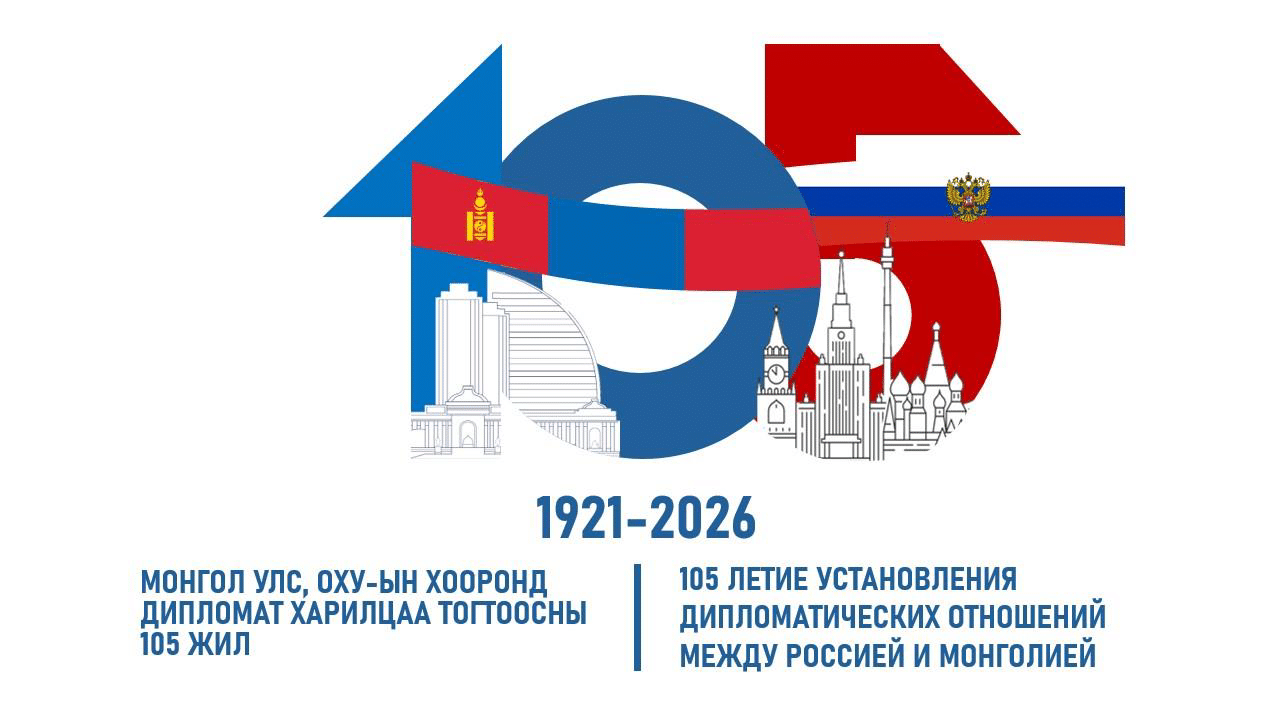
November 2026 will go down in history as a time of a major anniversary. One hundred and five years ago, on 13 November 1921, diplomatic relations were established between Mongolia and Russia. For more than a century, our peoples have walked side by side—through war and peace, through construction and reform, through eras in which the map of the world changed, but the friendship between neighbours endured. Today, in an era of a multipolar world, this friendship is taking on new meaning and new forms. One of them is already knocking at our door.
Mongolia – the heart of the Eurasian dialogue
Geography is destiny, the ancients used to say. Mongolia lies between two great powers—Russia and China. But our country is not merely a “buffer” on the map. Mongolia is a bridge: a bridge between cultures, languages and traditions—and, something especially important today, a bridge for diplomacy.
In 2026, we are marking not only the 105th anniversary of relations with Russia. Mongolia is confidently developing its strategic partnership with China, deepening its ties with the countries of Central Asia, and consistently strengthening its voice within the Shanghai Cooperation Organisation (SCO). As an SCO Dialogue Partner, our country is ready and able to become an active participant in shaping a new architecture of trust in Eurasia.
But diplomacy is not just presidents signing agreements. Genuine, living diplomacy is born wherever people meet: students, artists, scholars, volunteers and young entrepreneurs. It is there that we hear not formal speeches, but real conversations in Mongolian, Russian and Chinese.
People’s diplomacy: what we are missing
Let us be honest: despite the wealth of interstate contacts among Mongolia, Russia and China, youth and humanitarian exchange remain undervalued. We build gas pipelines and railways, sign trade agreements and hold summits. But how much do we really know about one another at the level of ordinary people? How much does a Mongolian student know about the lives of young people in Russia and China? How many foreigners understand the nomadic philosophy of Mongolian culture?
It is precisely this gap that a Youth Center for People’s Diplomacy of the SCO in Mongolia—an institution our country needs—could help fill.
The creation of such a center could provide a vibrant platform where young people from the three countries, as well as from SCO member states and dialogue partners, would be able to:
1. Learn and teach. Russian and Chinese languages, Mongolian culture and the history of nomadic civilization—not through dry textbooks, but through hands-on projects, theatre productions, film screenings and expeditions.
2. Engage in dialogue. Youth forums and SCO model sessions, where students from Ulaanbaatar, Beijing, Moscow, Astana and Tashkent work together to find solutions to common problems.
Create. Joint start-ups, artist residencies, research laboratories and volunteer programmes—all the initiatives that turn the abstract idea of “friendship among peoples” into concrete projects and personal bonds
The SCO as a natural home for youth diplomacy
Why should the Shanghai Cooperation Organisation, in particular, provide the framework for such a center? The answer is clear.
The SCO is neither a military bloc nor a narrowly defined economic alliance. First and foremost, it is an organisation for dialogue and trust. Its Charter explicitly sets out the goals of strengthening mutual understanding among peoples, developing cultural diversity and promoting the principles of a just world order. At a time when the world is experiencing turbulence and polarisation, the SCO remains one of the few platforms where the voices of the East, the West and the South can all be heard.
For Mongolia, the status of SCO Dialogue Partner is no mere formality. It is recognition of our unique role as a place where civilisations meet. Establishing an SCO Center for People’s Diplomacy on Mongolian soil would naturally serve this mission and transform our partner status into that of an active co-creator of the Organisation’s agenda.
105 Years of Friendship: A Foundation for a New Edifice
The anniversary of diplomatic relations between Mongolia and Russia is not merely an occasion to remember the past. It is an opportunity to look ahead.
Over the past 105 years, our countries have been through a great deal. Mongolian herders supported Soviet soldiers during the Great Patriotic War. Soviet specialists helped build Erdenet and Darkhan. Mongolian students filled the lecture halls of universities in Moscow and Leningrad. This shared memory is an invaluable asset—but one that must not only be preserved; it must also be invested in the new generation.
Today, as Russia and Mongolia stand on the threshold of new joint projects—from the Russia–Mongolia–China Economic Development Corridor to environmental initiatives to protect the steppes and Lake Khövsgöl—young people must not remain bystanders. They must be direct participants in these processes.
It is precisely in the border regions—Buryatia, Zabaykalsky Krai and China’s Inner Mongolia—that youth diplomacy takes on particular strength. These are lands where the border is not a wall, but a meeting place; where our ancestors spoke similar languages, and where tea is drunk with milk on both sides of the frontier. This living, warm connection must be cherished and passed on.
Trilateral format: Mongolia, Russia, China
The trilateral Mongolia–Russia–China format deserves particular attention. A mechanism for trilateral consultations was established in 2016, and in 2023 the parties reaffirmed their commitment to deepening cooperation within the framework of the Economic Corridor. But an economy without a humanitarian dimension is a skeleton without flesh.
The SCO Center for People’s Diplomacy could become precisely that “soft” element of trilateral cooperation:
• Cultural seasons in the three countries, featuring festivals, exhibitions and touring performances;
• Educational bridges—student and faculty exchange programmes among universities in the three countries;
• Environmental camps on the banks of the Selenga, Onon and Kherlen rivers, where young people from the three countries work together to address problems that know no borders;
• Media laboratories where young journalists and bloggers from the three countries learn to tell one another’s stories truthfully and respectfully.
The time to act is now
We live in an era of rapid global change. New alliances are taking shape, logistics chains are being reconfigured, and the concepts of sovereignty and multipolarity are being reconsidered. In this new world, Mongolia has a rare opportunity: to be not an object of geopolitics, but an actor in it—a platform for dialogue and a voice of reason and good neighbourliness.
But this opportunity will not realise itself. It requires institutions, infrastructure and, above all, people: young, energetic, multilingual people who understand and respect the cultures of their neighbours.
The establishment of a Youth Center for People’s Diplomacy of the SCO in Mongolia is not a utopian idea. It is a concrete, achievable project that can already bring together the efforts of government bodies, universities, civil society organisations and businesses from the three countries.
There is an old Mongolian saying: “Mori unaad, zamdaa gar” (“Mount your horse and set out on your journey”). We are already in the saddle. The 105-year friendship with Russia, centuries of coexistence with China and the growing role of the SCO—all of these are our horse, our reserve of strength.
But it is the younger generation that will forge the road ahead. And young people need their own ger, their own hearth—a place where they can meet, talk, debate and reach agreement. A place where Mongolians, Russians, Chinese, Kazakhs, Uzbeks, Tajiks and all those who believe that the future of Eurasia is built not against anyone, but together with one another, can simply be together.
Let us build this ger together.