Valeria Porokhova. A Lifelong Journey to the Quran
“Porokhova is the first translator to convey the heavenly music of the Quran’s versification.”
Andrey Bertels
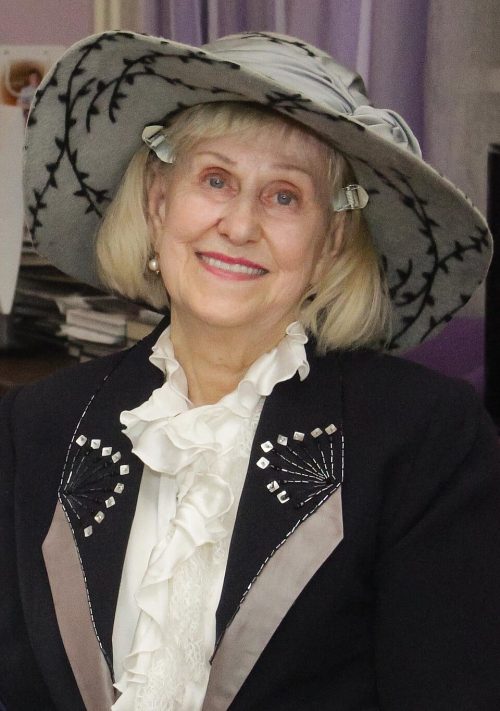
The first woman to produce a poetic translation of the Holy Quran (it is listed in the Russian Book of Records as the most popular and widely printed copy), an active participant in regional, national, and international conferences and forums, she endured a difficult life yet managed to preserve her love for Islam in her heart. She also served as co-chair of the Straight Path organization of Russian Muslims and, for a time, chaired the board of the Al-Furqan Islamic Educational Center in Moscow.
This year, she would have turned 80. We invite you to learn more about her life and scholarly work, which, it would be no exaggeration to say, truly changed the world of Russian Muslims. From Nobility to a Sincere Faith in Allah
Valeria Porokhova was born in 1940 in the Russian city of Ukhta to a family of hereditary nobles. Valeria’s father was executed during Stalin’s purges. As the wife of an enemy of the people, her mother was sent into exile, where she was born. She was destined to prepare a poetic translation of the Koranic commentary. The family was only able to return to Moscow during the Khrushchev Thaw, where Valeria’s mother taught at the Moscow Medical Academy for nearly 30 years.
Valeria herself graduated from the Maurice Thorez Moscow State Pedagogical Institute of Foreign Languages (MSPIFL). Even then, she demonstrated her talent and diligence: she became the first in the institute’s history to defend a thesis in a foreign language.
After successfully graduating, she taught for 18 years at the Moscow Engineering Physics Institute. Alongside her teaching, Valeria Porokhova studied at the Philosophy Department of Moscow State University. In 1975, Valeria Porokhova married Muhammad Said Al-Roshd, a Sharia law graduate from Damascus University who was then studying at the Moscow Automobile and Mechanical Institute. As Valeria wrote in her memoirs, Muhammad proposed to her on the sixth day after they met and was immediately and decisively rejected: “But by refusing, I unknowingly ignored the peculiarities of the Eastern male mentality: strong and principled in achieving his desires. Muhammad took an academic leave from the institute and, within eight months, won the hearts of not only me, my mother, Nadezhda Pavlovna, but also the entire family.”
Ten years later, a significant moment would arrive for Valeria: she and her husband moved from Moscow to Damascus, where Porokhova converted to Islam and took the name Iman (which means “faith” in Russian). She was 45 years old at the time. As she would later note in numerous interviews, this was one of the most important and difficult decisions she had been making her entire adult life: “My mother was baptized in the same St. Catherine’s Cathedral in Tsarskoye Selo as the Tsar’s daughters. She commanded me to be baptized as well. Over the years, this became my great desire.” Valery’s baptism took place in 1981: “My husband is an Arab, and I immediately dotted the i’s. He has his faith, and I have mine.”
However, with each passing day, Valery’s interest in the Muslim Holy Scriptures only grew. Line by line, the suras of the Quran revealed Islam to her, its reverent and tolerant attitude toward people, human rights, and religions. It’s therefore not surprising that the end result was a move to Syria and the adoption of Islam: “I was reading the Quran, and at some point I felt a kind of illumination sweep over me from within. I felt with all my heart that I was a Muslim, and there wasn’t a single word in this holy book that my heart disagreed with.” As she herself would later note in one of her many interviews, it was precisely this conscious conversion to Islam that became the greatest gift of fate.
Here in Syria, Valeria (Iman) Porokhova became more familiar with Arabic culture and read numerous works on the philosophy, religion, and history of the Islamic world.
A poetic translation of the Quran’s commentary and the attitude of theologians
Let’s begin with the fact that Valeria Porokhova’s translation of the Quran’s commentary was recognized as canonical by the Al-Azhar Islamic Research Academy. This is the highest recognition of work in the Islamic world. From 1985 to the early 1990s, when Valeria lived in Damascus, she tirelessly worked on translating the meanings of the Quran: “I wanted the Quran to be translated into Russian not by someone, so to speak, an outsider, but by someone who actually believed in what it preached. Only in this way can its essence, its meaning, be conveyed without bias or preconceptions.”
Valeria Mikhailovna strove to convey the content of the Arabic text while preserving the form, imagery, and style of the sacred scripture. The translation was written in verse, and it took 11 years to complete. Her many years of work were highly praised by experts. For example, Alexei Malashenko, an expert at the Moscow branch of the Carnegie Center, called the translation “a brilliant poetic work.”
And the renowned Soviet orientalist Andrei Bertels said: “Porokhova is the first translator to convey the heavenly music of the Quran’s verse.” The Human Appeal International (UAE) Research Center stated in its analytical report that “the results of their analysis reliably indicated the translation’s distinctly Muslim focus, executed in the original Islamic tradition, and the absence of distortions in the conveyance of meaning.” Following the translation’s publication, UAE President Sheikh Zayed bin Sultan Al Nahyan commissioned a thorough analysis of Porokhova’s work, involving eight scholars—four from Arab countries and four from Russia. Following the scholars’ approval, the sheikh financed the publication of the translation in a print run of 25,000 copies as a gift to Russian Muslims during the holy month of Ramadan. Valeria Porokhova’s Quotes on Islam
When you study the Quran, you will be stunned by its incredible depth. Once, after a four-hour lecture at the Russian Academy of Sciences, a 70-year-old venerable academic stood up in the audience and said, “If this is the Quran, then I am a Muslim.” The Quran is eternal, and it’s clear that such knowledge couldn’t have existed in the seventh century. And if it did exist, then it was from God. This is important to understand.
I realized that I’ve been a Muslim my whole life. I didn’t know this until I read the Quran. I tell you frankly, if a person reads the Quran, after turning the last page, they will say, “Praise be to Allah Almighty.” The only thing is, they should read slowly. My return to Islam happened in Syria, when I read the Quran with understanding, that is, with tafsir (commentary). After all, even the most educated Arabs read the Quran only with tafsir.
The Quran is the only Holy Scripture that has reached us through fourteen centuries unchanged. None of the numerous translators of the Eternal Book has ever claimed to accurately convey the text. In principle, any translation, by definition, cannot be accurate. After all, the Quran is written in Old Arabic, which differs significantly from modern Arabic, sometimes leading to unintentional distortions of the meaning of words and text.
What I have done is only a modest effort, which cannot claim to convey any significant portion of the divine beauty of the Quran’s verses, the heavenly music of its verses. When I translated the Quran, my skin tightened with awe before the Great Book.
Islam is a way of life. And this is what distinguishes it from other religions. You wake up in the morning a Muslim, you live your day a Muslim, and you go to bed a Muslim. Moreover, the Prophet Muhammad (peace be upon him) said something remarkable that we should all adhere to: “Every morning a man takes his soul hostage, and in the evening he receives it back, either laden with sins or lightened and adorned with good deeds.”
In Islam, you cannot come to the mosque on Friday to confess, take communion, and emerge sinless. In Islam, you will be held accountable for every sin. Moreover, Islam not only insists on performing tawba (repentance), it also insists that evil be offset by goodness for the benefit of the victim. No mortal person on earth can forgive your sin. This is a very important point.
Let us immediately emphasize that there is no such thing as “Islamic terrorism.” Criminals have neither nationality nor religion. And according to the Quran, such people are criminals. People who commit crimes must immediately be stripped of their religious affiliation. We have no right to say that this terrorist was a Muslim, or a Jew, or a Christian. He ceases to be one, for he is a criminal, he is outside of religion. He must be tried under the civil code. And then the term “Islamic threat”… It’s absurd in itself. The word “Islam” means “peace.” What we get is a “peaceful threat.”
The Quran does not tolerate misinterpretation.
Prepared by Ilmira Gafiyatullina
Photo: Maxim Platonov/Realnoe Vremya online newspaper.