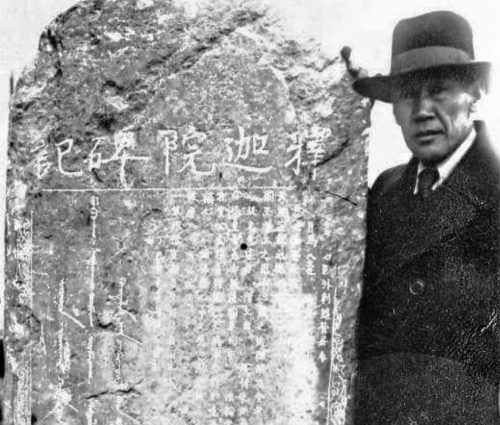
The famous geographer, naturalist, scientist, and enlightener O. Namnandorj was born on November 25, 1900, in Yamaat, Delgerkhaan soum, Tuv aimag. He was the youngest son in the family. Since his parents died when he was young, his elder brother, Lama Luvsangombo, who lived in the village, brought him and enrolled him as a student at his acquaintance Ganjuur Zalan. Ganjuur Zalan was a learned man who participated in the negotiations bettween the three countries.
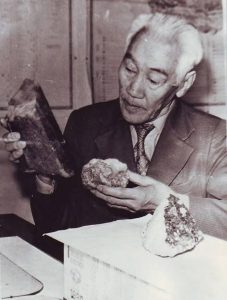
Later, he enrolled as a student of Dogsom Bes, the former Minister of Finance. Since 1922, he worked as a typist in the State Printing Committee. He worked as a scribe in the garage of the Ministry of War, and Bumtsend Guy, who was the head of the department at that time, decided to send him to school.
After passing a certain exam, he was one of 18 students who were to study in the Soviet Union. In 1924, Dornot entered the world-famous Yanukedze Institute of Oriental Studies in Leningrad, which at that time was the center of European culture and science, and graduated in 1928. While studying at this school, he played the role of a shaman in the film “The Polar Ray” produced at the Leningrad Film Factory. While studying at this beautiful school, he was taught by famous Mongolian scholars Vladimirtsov and Kozin. Once, Vladimirtsov’s teacher said, “You are very interested in geography,” and later he became a geographer.
Scientist O. Namnandorj graduated from the Moscow State Road Construction Institute in 1935-1938, the Geography Department of the State University of Mongolia in 1946-1949, and then the Geography Department of the National University of Mongolia in 1960. When he went to Moscow to study in 1935, Ambassador N. Sambuu invited him to work at the Embassy. In his homeland, from 1928 to 1935, the enlightener O. Namnandorj worked as a translator at the Central Theater, Mongolian Teeh, and Industrial Combine, and as a secretary at the city cooperative. From 1938 to 1948, he worked as a teacher at the Trade College, the Federal College, the Teacher Training School, and the 1st Secondary School of General Education, and as a specialist in the Department of Teaching Methods of the Ministry of People’s Education.
He also taught physical geography, economic geography of foreign countries, natural sciences, and astronomy in schools.
He was known for his love of luxury, his use of exotic things, his stylish and clean clothes, and his contemporaries called him “Gentleman Namnan.”
In 1940, scientist O. Namnandorj married a Buryat woman from the Yeroo region, Dashimaa, and they had a large family. His wife was a very artistic woman. In 1948, he moved to the Institute of Science and began working in the geography and propaganda departments.
The enlightened scientist O. Namnandorj founded the “Institute of Geology and Perm Studies” in 1962, the Mongolian “Nature Conservation Society” in 1974, and in 1964 he led the first Paleontological Expedition of the Mongolian Academy of Sciences. 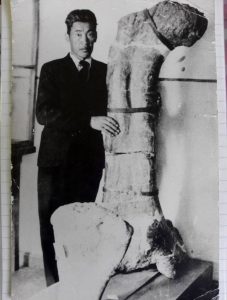
He was a highly intellectual, tireless, hardworking, and proud man. Scientist O. Namnandorj authored more than 80 books, pamphlets, and manuals, hundreds of printed works, and about 2,000 scientific and promotional articles, which were published in many domestic and foreign journals. Of these, 6 works were published abroad in English, Russian, and French, 2 books were published in the USA, and 1 book was published in English in India. Also, 19 translated and edited works are currently registered.
His research covers a wide range of fields, including physics, mathematics, astronomy, hydrology, mineralogy, soil science, astronomy, paleogeography, paleontology, geography, and zoology. Among the famous books of scientist O. Namnandorj, we can mention:
“Mongolian protected areas and protected animals”, “Gobiin great protected areas, protected areas”, “Magic number”, etc. There are also many discoveries related to rare artifacts. “Porcelain and enamel making methods”, “Zuglur”, “Monkh Khan’s luminous statue” were discovered. Also, rock paintings were found in the three blue caves of Khovd, 32 golden plaques of the bridle were found in the tomb of the Turkic soothsayer Tonyu Kuk near Nalaikh, and a large grain jar from the Hunnu period was found in the Arkhangai Khashaat.
He also wrote a wonderful work about the tracks of large dinosaurs and the fossils of animals of the Tertiary and Quaternary periods.
Until his retirement in 1984, scientist O. Namnandorj worked fruitfully for 50 years in the country, 36 years in the Academy of Sciences. The eldest daughter of the great scientist, N. Densmaa, compiled her father’s works and published them in 8 volumes from 2003 to 2012. In order to perpetuate the name of the great scientist who will be remembered for centuries, a general education school in Delgerkhaan soum, Tuv aimag, was named after him, and a memorial monument was erected in Yamaata, his birthplace. In addition, the Mongolian Society for the Promotion of Science decided to establish the “O. Namnandorj Gold Medal” and award it to those who have contributed to the promotion of science.
Great scientist O. Namnandorj was a unique person who was called the “Founder of Nature Conservation”, “Founder of Mongolian Tourism Geography”, and “The Great Father of Nature” in the new era of Mongolia, which has a long tradition of protecting the environment.
Prepared by G. Bolorchimeg.