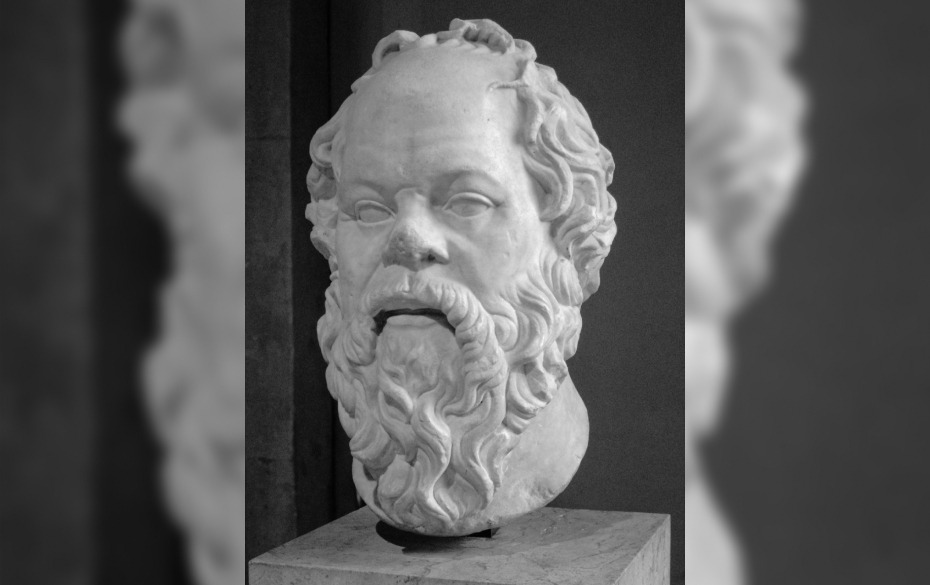
The great ancient Greek philosopher Socrates, originally from Athens, lived from 469 to 399 BC. Socrates is one of the founders of the Western philosophical tradition. He left no written works; information about his life and views is preserved primarily in the works of Plato, Xenophon, and other ancient authors.
Socrates came from a modest Athenian family. He spent most of his life in conversations on the streets, squares, and public spaces of Athens, discussing with his fellow citizens questions of virtue, justice, truth, knowledge, and moral behavior.
Socrates’ primary method was dialogue: he asked his interlocutor successive questions, helping them discover contradictions in their own beliefs. This approach is known as the Socratic method.
Socrates believed that a person should primarily strive for self-knowledge and moral improvement.
Socrates famously articulated the maxim: “Know thyself.”
In 399 BCE, Socrates was brought to trial. He was found guilty and sentenced to death. According to Plato, Socrates refused to flee Athens and drank a cup of poison—hemlock.
Socrates’s great achievements:
He made humanity and morality central themes of philosophy.
He developed a dialogical method for investigating truth based on questions and critical analysis of the answers.
He laid the foundations of philosophical ethics—systematic reflection on goodness, justice, virtue, and responsibility.
He shaped the tradition of critical thinking, calling for a refusal to accept beliefs without rational examination.
He had a profound influence on his students, primarily Plato, and through him, on the subsequent development of European philosophy.
Socrates became the symbol of the philosopher who places the search for truth and moral principles above personal gain and even his own life. His ideas had a fundamental influence on Plato, Aristotle and the subsequent philosophical tradition throughout the civilized world.
Prepared by B. Bolortsetseg