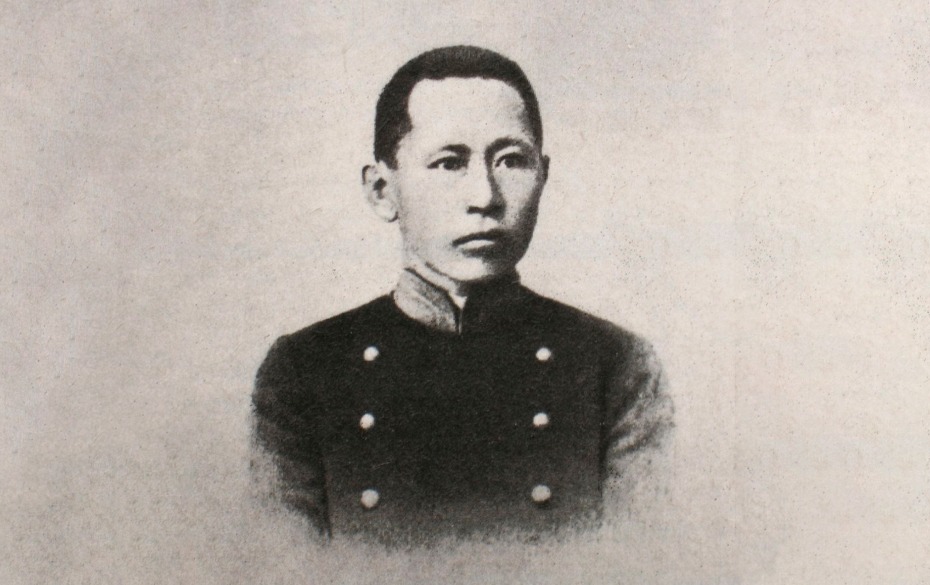
A great son of the Buryat people, Gombojab Tsebekovich Tsybikov is a distinguished traveler, ethnographer, Tibetologist, Mongolian scholar, Buddhologist, photographer, teacher, and public figure.
Gombojab Tsebekovich Tsybikov was born on April 20, 1873, in Urda-Aga, Transbaikal Region, to a Buryat family. His father, Tsebek Montuyev, was of the Kubdut clan and was respected by his fellow countrymen. The family spoke Mongolian and Tibetan, and Buddhist culture was an important part of Tsybikov’s environment.
This background played a significant role in his future life. From childhood, Tsybikov was immersed in the cultural space that connected Buryatia, Mongolia, and the Tibetan Buddhist world.
In 1893, Tsybikov traveled to Urga — present-day Ulaanbaatar — where he studied Mongolian, Chinese, and Manchu. In 1895, he enrolled in the Faculty of Oriental Languages at St. Petersburg University.
In 1899, Tsybikov graduated with a gold medal and a first-class diploma. By this time, he already possessed a solid foundation in Oriental languages and culture.
This education became the foundation for his future expedition.
At the end of the 19th century, Tibet remained virtually closed to Europeans. Access for foreigners to Lhasa was limited, and any attempt to enter could have serious consequences.
The Russian Geographical Society and Russian orientalists sought to obtain reliable information about Tibet — its geography, population, monasteries, political life, religion, and trade routes. Tsybikov was a particularly suitable candidate: he was an orientalist, familiar with the Mongolian and Tibetan cultural environments, and could travel with Buddhist pilgrims. It was his Buryat origins and knowledge of the Buddhist tradition that facilitated such a journey.
He faced not only geographical but also scientific objectives: collecting information about Tibet, taking notes, acquiring Tibetan manuscripts and woodblock prints, and studying the monastic centers and the country’s population.
The Great Journey of 1899–1902.
The journey began on November 25, 1899.
Tsybikov set out from Urga disguised as a Buryat Buddhist pilgrim. His diaries describe the beginning of the journey: he departed from Urga with a group of Alashan Mongols.
The expedition lasted almost three years, until May 2, 1902. Tsybikov spent approximately 888 days in Tibet.
He visited many important sites in Central Tibet, including:
- Lhasa;
- Gumbum;
- Labran;
- Ganden;
- Drepung;
- Sera;
- Shigatse;
- Tashilhunpo Monastery;
- Zetang;
- Samye.
A particularly important stop was his stay in Lhasa, the capital of Tibet.
Tsybikov spent considerable time in Lhasa and explored the city, its people, monasteries, religious institutions, and everyday life.
Historians find his observations particularly valuable because they were made by someone within Tibetan society, rather than by an outsider who had only spent a short time in the country.
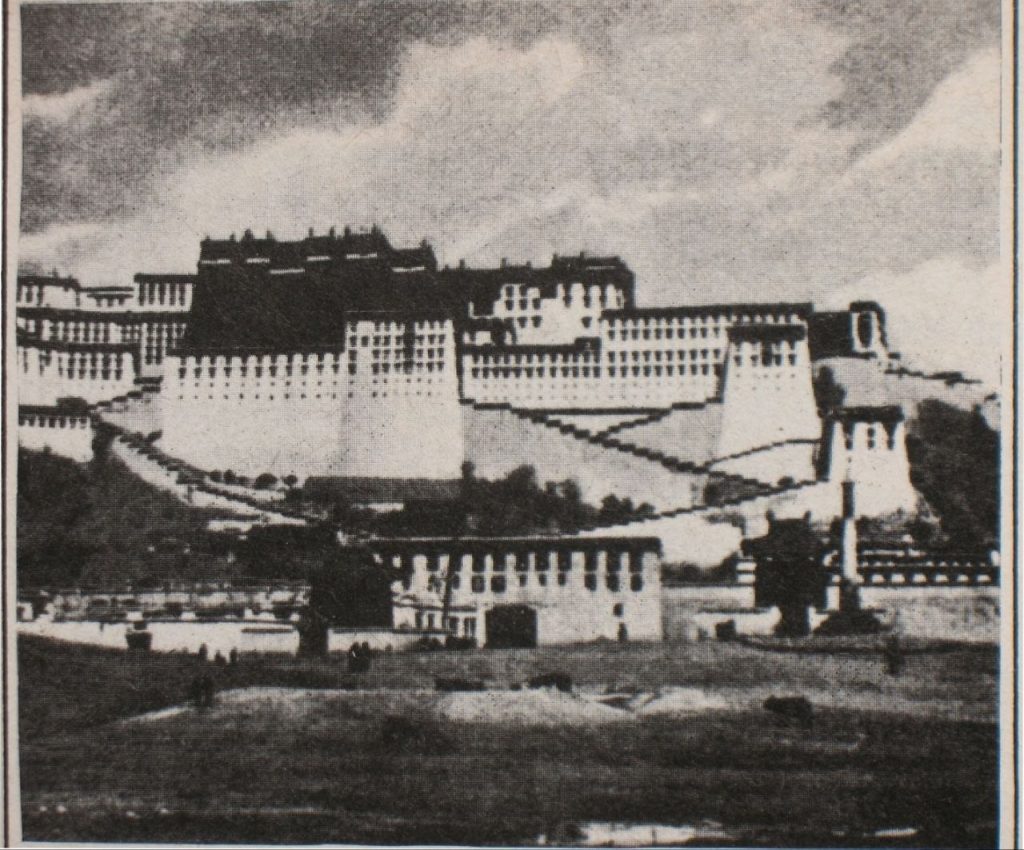
Tsybikov also had the opportunity to visit the most important monastic centers around Lhasa. The Russian Geographical Society notes that his journey was unusual for its time in terms of the breadth of his access to Tibetan cities and monasteries. Tsybikov became the first person in history to photograph Lhasa, Tibet.
One of Tsybikov’s greatest achievements was his photographic collection.
He photographed Tibet secretly, as open photography could have aroused suspicion. In total, approximately 200 photographs are associated with his journey.
Of particular historical value are the photographs of:
- Lhasa;
- Potala Palace;
- monasteries;
- streets and squares;
- Tibetan residents;
- religious buildings;
- landscapes of Central Tibet.
One of the most famous is an early photograph of the Potala Palace, taken by Tsybikov in 1901.
His images are now more than just works of photography. They are visual historical documents that provide a glimpse into Lhasa and Tibet in the early 20th century.
The Smithsonian Institution holds a collection of photographs of Central Tibet, associated with the materials of the Russian Geographical Society; In the description of the collection, Tsybikov is described as a Buryat scholar and Buddhist who made a pilgrimage to Lhasa from 1899 to 1902.
During his stay in Lhasa, Tsybikov was granted an audience with the 13th Dalai Lama.
This was an important event, although the audience itself was purely formal.
What is particularly interesting for historians is that Tsybikov found himself directly involved in the Tibetan religious and political world during the reign of Thupten Gyatso, the 13th Dalai Lama.
Thus, his materials relate to a crucial period in Tibetan history at the turn of the 20th century.
Tsybikov’s research was not limited to photographs.
He kept diaries, recording information about:
- geography
- distances;
- roads;
- terrain;
- climate;
- populated areas;
- trade routes.
- Ethnography
- Clothing;
- Housing;
- Customs;
- Diet;
- Economy;
- Trade;
- Social Relations.
- Buddhism
- Monasteries;
- Religious Rituals;
- Clergy;
- Pilgrimage.
Tsybikov’s work focused on the history and politics of the Tibetan administration, the relations between various religious centers, the situation in Tibet, and Tibet’s relations with neighboring states.
He also collected Tibetan books, manuscripts, and woodblock prints.
In April 1902, Tsybikov began his return journey.
On May 2, 1902, he crossed the border at Kyakhta and returned to the Russian Empire.
Thus, a journey that had begun in November 1899 concluded.
Upon his return, he presented the results of his research to the Russian Geographical Society. In May 1903, Tsybikov presented his photographs and report to the society; for the results of his journey, he was awarded the N. M. Przhevalsky Prize.
The expedition’s main literary achievement was the famous book:
“A Buddhist Pilgrim at the Holy Places of Tibet (Based on Diaries Kept in 1899–1902)”.
The book was published in 1919.
It is more than just a travelogue.
The book combines:
- the traveler’s personal observations;
- geographical information;
- ethnography;
- descriptions of Buddhist monasteries;
- history;
- information about Tibetan culture;
- observations of political and social life.
The Russian State Library indicates that the 1919 edition has subsequently been reprinted several times; a modern reprint was published by the Far Eastern Federal University in 2018.
After his journey, Tsybikov did not simply become a “former traveler.” On the contrary, it was after the expedition that a major period of his scientific and teaching work began.
He studied:
- Tibetology;
- Mongol studies;
- Buddhology;
- philology;
- ethnography;
- translations;
- teaching Oriental languages.
Mongolia occupied a special place in Tsybikov’s work.
He had a good knowledge of the Mongolian language and culture, and even before the Tibetan expedition, he lived and studied in Urga. His scholarly interests connected three large cultural spaces:
Buryatia, Mongolia, and Tibet.
For this reason, Tsybikov’s significance extends far beyond the Tibetan expedition alone.
He served as a scholar-mediator between the Russian Orientalist school and the Buddhist cultures of Central Asia.
Gombojab Tsybikov continued his scholarly, educational, and social activities even after the revolutionary events of 1917.
He participated in educational and government projects related to Buryatia and Mongolia, and continued to study Eastern languages and culture.
Gombojab Tsybikov died on September 20, 1930, in Aginskoye.
The work of Gombojav Tsybikov, a great son of the Buryat people, has several historical significance:
1. As a traveler:
Tsybikov made one of the most significant journeys to Central Asia in the late 19th and early 20th centuries, reaching Lhasa during a period when foreign access there was extremely restricted.
2. As a photographer:
Tsybikov’s photographs are rare visual evidence of Tibet in the early 20th century.
3. As a scholar:
Tsybikov collected extensive material on the geography, ethnography, history, religion, and languages of Tibet.
Gombojav Tsybikov became one of the outstanding representatives of the Buryat scientific and educational community of his time.
4. As an Orientalist:
G. Tsybikov contributed to the development of the Russian school of Mongolian, Tibetan, and Buddhist studies.
5. As a book author:
Gombojab Tsybikov’s book “A Buddhist Pilgrim at the Holy Places of Tibet” remains an important source for the study of Tibet at the turn of the 19th and 20th centuries.
There is an important feature in the history of Tibetan studies: Tsybikov did not simply observe Tibet from the outside. He was able to enter the Tibetan cultural space as a Buddhist pilgrim, using his knowledge of the language, religious culture, and customs.
Therefore, his work represents a rare combination:
- pilgrimage + scientific expedition + ethnographic research + photography + Oriental studies.
It is this remarkable combination of different approaches that makes the legacy of Gombojab Tsybikov, an outstanding son of the Buryat people, a landmark in world history.
Prepared by Prof. T. Chagataikhaan