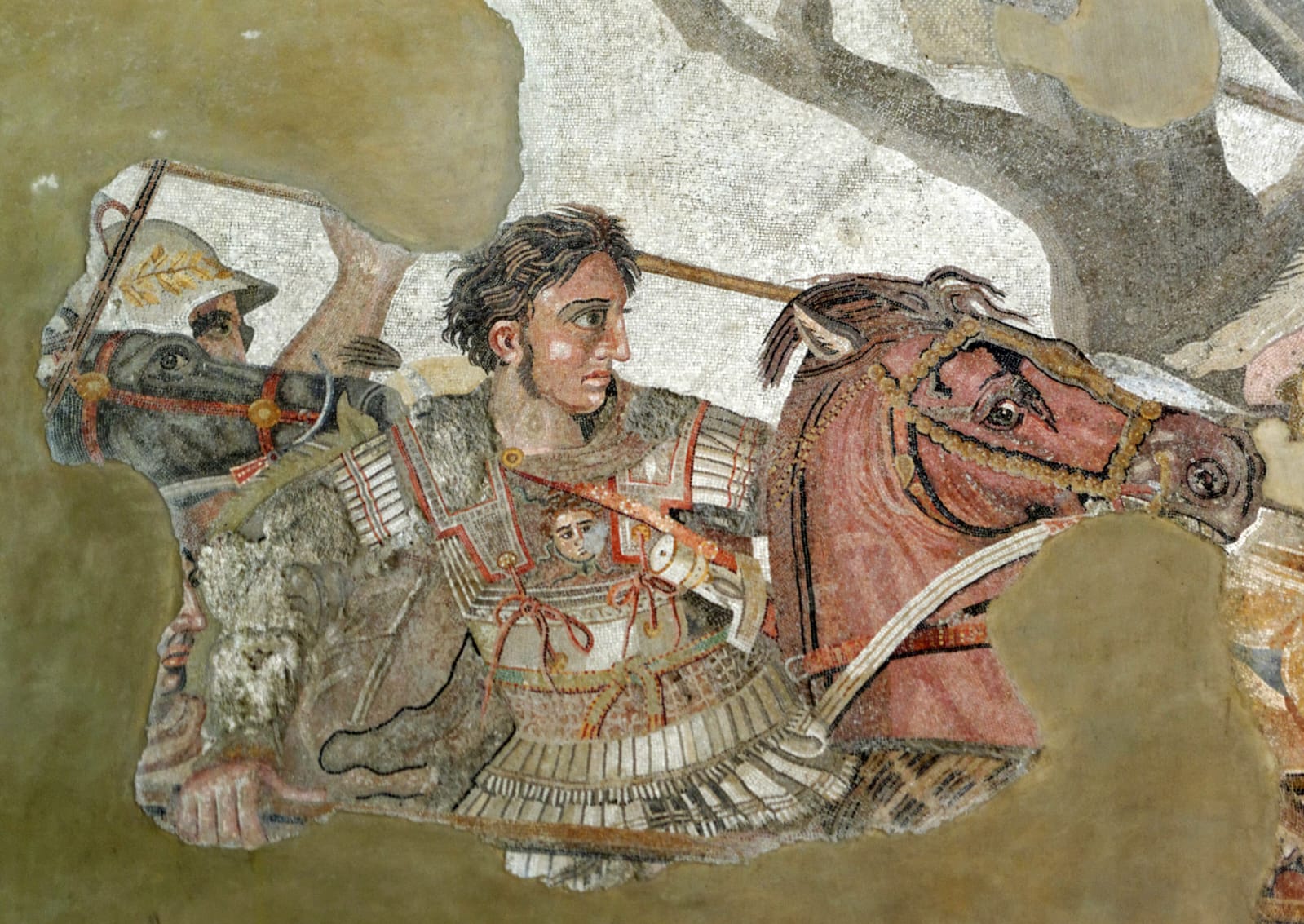
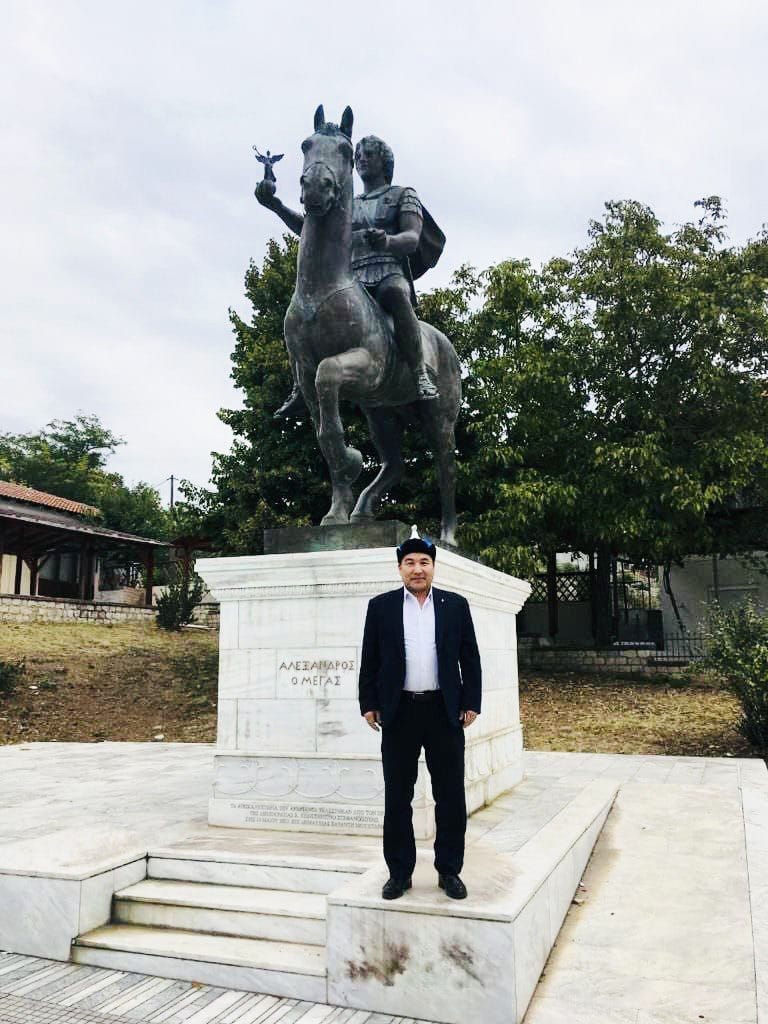
Alexander the Great (356–323 BC), a great son of the Greek people, an outstanding military leader of the ancient world, the creator of a vast empire, and one of the most famous historical figures in human history. Alexander the Great united the West and the East.
In his short life—just 32 years—Alexander defeated the mighty Persian Empire, subjugated Egypt, marched through Central Asia, and reached northwestern India. His campaigns changed the political map of the ancient world and contributed to the spread of Greek culture across vast territories of Asiaя
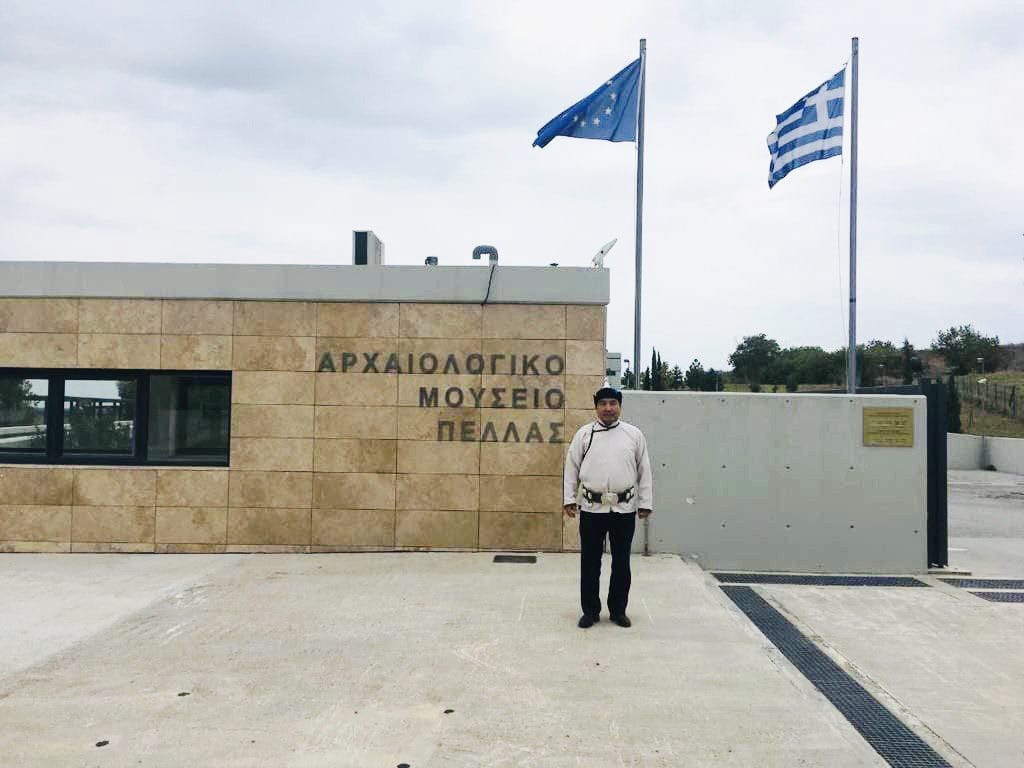
Alexander was born in 356 BC in Pella, the capital of ancient Macedonia (Northern Greece). His father was King Philip II, who transformed Macedonia into the most powerful state on the Balkan Peninsula. Alexander’s mother was Queen Olympias, a descendant of the royal family of Epirus. From childhood, Alexander was raised as heir to the throne. He studied military science, horsemanship, literature, philosophy, and statecraft.
According to ancient legends, one of the symbols of his youth was the horse Bucephalus. Legend has it that Alexander managed to tame it after noticing that the animal was afraid of its own shadow. This story has come down to us thanks to ancient biographers, although some details may have been embellished.
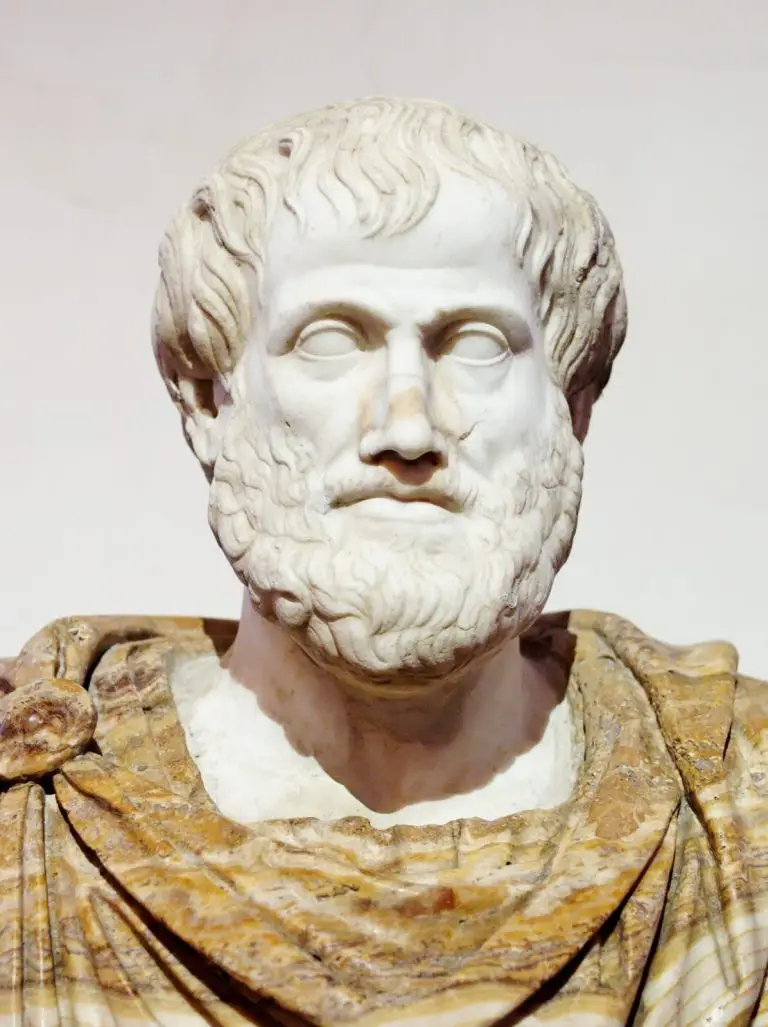
In 342 BC, the famous philosopher Aristotle became Alexander’s tutor. Under his guidance, Alexander studied Greek literature, philosophy, ethics, politics, and natural science.
His education introduced the future king to the cultural heritage of Ancient Greece. His interest in Homer’s poems and the heroic images of the Iliad is particularly significant in the ancient tradition.
In 336 BC, Philip II was assassinated, and the twenty-year-old Alexander became king of Macedonia.
His accession to the throne was fraught with political difficulties. The young ruler needed to consolidate his power within the country, maintain control over the Greek states, and preserve the army trained by his father.
Alexander quickly suppressed the rebellions and restored Macedonian influence in Greece. He then continued preparations for the campaign against the Persian Empire, which his father had begun.
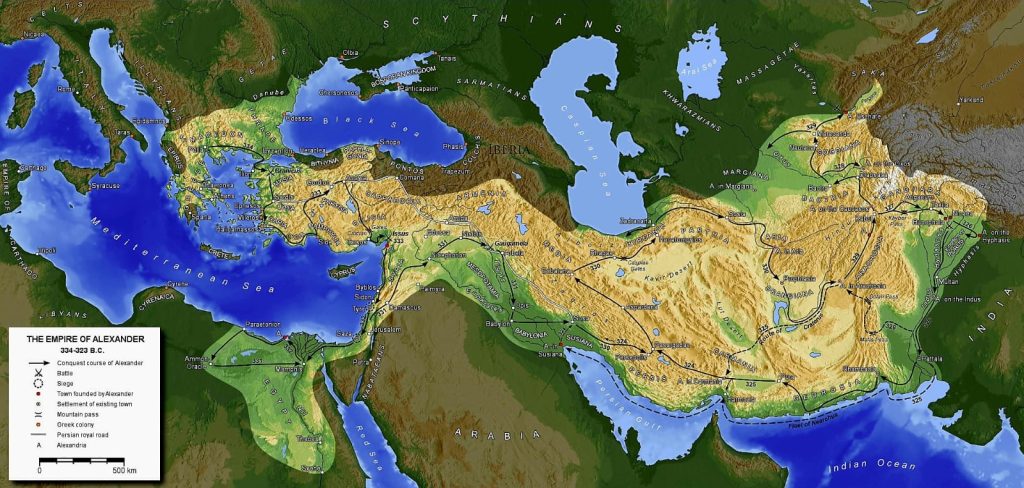
In 334 BCE, Alexander crossed the Hellespont and entered Asia Minor. A campaign began that, within a few years, led to the fall of one of the largest states of the ancient world.
Alexander became famous for the fact that, in ten years of military campaigns, he created an empire stretching from the Balkan Peninsula to India, Sogdiana, and Bactria.
In 334 BCE, at the Battle of Granicus, Alexander won his first major victory over the Persian forces in Asia Minor and opened the way deep into the Persian Empire.
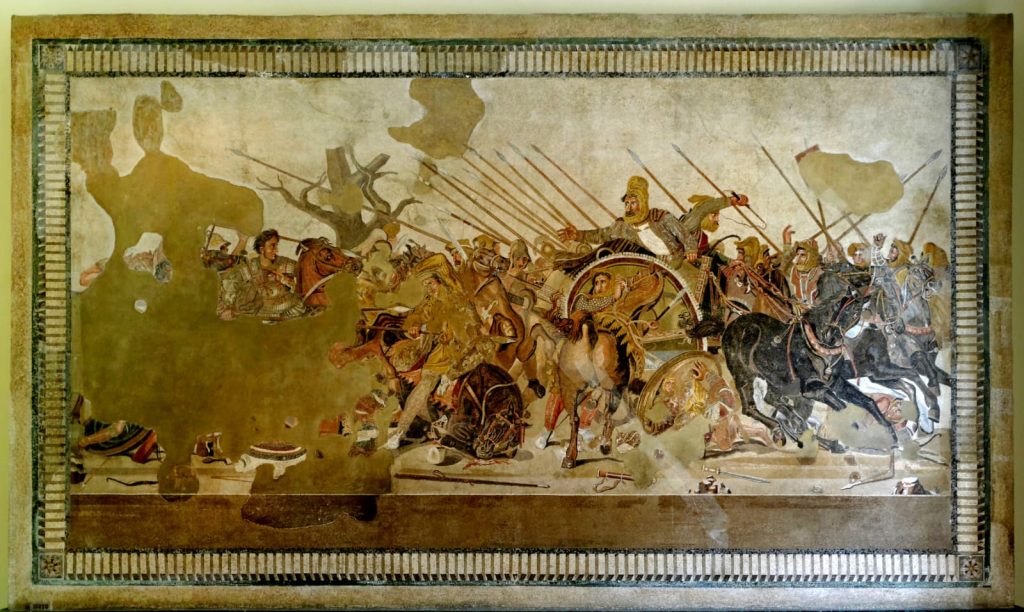
In 333 BCE, At the Battle of Issus, the Greek army defeated the army of the Persian king Darius III. This victory strengthened Alexander’s position in Asia Minor and on the eastern coast of the Mediterranean.
In 332 BCE, Tyre and Egypt were conquered.
After a difficult siege of Tyre, Alexander subdued important coastal territories and entered Egypt, where he was accepted as the new ruler.
In 331 BCE, Alexander the Great defeated Darius III at the Battle of Gaugamela, marking the decisive stage in the defeat of the Persian Empire. Alexander captured the most important centers of power, including Babylon.
In 329–327 BCE, Alexander the Great conducted campaigns in Central Asia.
Alexander passed through Bactria and Sogdiana, located in the territories of modern-day Afghanistan, Tajikistan, Uzbekistan, and neighboring countries. Here, his troops encountered fierce resistance from local rulers and military leaders.
In 326 BC, the Battle of the Hydaspes took place.
In India, Alexander defeated the army of King Porus, employing tactical maneuvers against an army using war elephants. After this, his army refused to continue its advance eastward.
Alexander’s campaigns are particularly significant for the history of Central Asia. In the 4th century BC, these lands included the ancient regions of Bactria and Sogdiana, associated with trade, agriculture, urban centers, and ancient Iranian cultural traditions.
The Greek conquest was not unopposed. Local rulers and military leaders continued to resist, and Alexander’s troops encountered difficulties in the mountainous regions and vast plains.
One of Alexander’s most famous opponents in Sogdiana was Spitamenes. He organized resistance to the Greeks and used mobile units well adapted to local conditions. The struggle in the region proved significantly more difficult than many of Alexander’s previous campaigns.
In 327 BC, Alexander married Roxana, the daughter of one of the local noble rulers, Oxyartes. This marriage was not only a personal event but also part of a policy of establishing relationships with the local nobility.
Later, Alexander attempted to include representatives of the conquered peoples in the administrative system and the army. However, his policies met with resistance.
Opposition from some Greeks, who did not always accept the rapprochement with Eastern traditions.
Alexander’s conquests contributed to the spread of Hellenistic culture in Central Asia. At the same time, local cultures retained their own traditions and continued to develop, interacting with Greek and other cultural influences.
During his campaigns, Alexander the Great built approximately 40 cities. One of these cities was Alexandria Eskhata, in modern-day Tajikistan, near the beautiful Tajik city of Khujand.
Alexander the Great possessed exceptional organizational skills in military affairs. He knew how to coordinate infantry, cavalry, and auxiliary units, quickly assess the situation, and exploit the enemy’s weaknesses.
His army combined the Greek phalanx with heavy cavalry and other branches of the military.
The significance of Alexander the Great’s Greek Empire endured for centuries. Greek language, art, philosophy, and political traditions spread across vast territories of the Eastern Mediterranean, the Middle East, and Central Asia.
The Legacy of Alexander the Great:
Military Legacy. His campaigns became the subject of study for subsequent generations of commanders and military historians.
Political Legacy. His conquests changed the power structure in the Middle East and led to the emergence of new Hellenistic states.
Cultural Legacy. The interaction of Greek and Eastern traditions gave rise to new forms of art, education, and urban culture.
The Historical Legacy of Central Asia. Alexander’s campaigns became an important part of the history of Bactria and Sogdiana, although the development of these regions was also shaped by numerous local states and peoples.
Alexander the Great made history not only for his victories. His life became the subject of legends, literary works, and historical debates. His image has been perceived differently in different cultures: as a symbol of military glory, royal power, ambition, and the desire to transcend the boundaries of the known world.
An outstanding son of the Greek people, Alexander the Great is one of the key figures in world history. During his twelve-year reign, he created a global superpower, uniting the territories of Europe, Egypt, the Middle East, and parts of Central and South Asia.
The story of Alexander the Great demonstrates that a ruler’s personal abilities can significantly alter the course of events, but conquering vast territories is easier than ensuring their long-term unity.
The main historical outcome of Alexander the Great lies not only in the creation of an empire but also in the transformation of cultural and political ties between West and East.
Prepared by Prof.T.Chagataikhaan